SEPA Eligibility Checker
Find out whether a payment can be a SEPA payment, what you need to send it, and how fast it should arrive.
A payment can use SEPA when the payer's bank and the payee's bank are both in a SEPA country and the payment is in euro. SEPA now covers 41 countries, not only the EU: the UK, Switzerland and Serbia are in it. This tool applies those rules to the European Payments Council's official country list. It cannot tell whether your own bank offers the scheme.
Check a payment
Use the country where each bank is located. For an IBAN, that is the country code in its first two letters.
Nothing you choose leaves your browser.
Go Deeper
What SEPA Is
SEPA, the Single Euro Payments Area, is a set of payment schemes run by the European Payments Council (EPC) so that euro payments between banks in participating countries work the same way as a domestic payment. The two schemes this tool covers are:
- SEPA Credit Transfer (SCT): the standard euro transfer. The payer's bank must credit the payee's bank within one banking business day of receiving the order.
- SEPA Instant Credit Transfer (SCT Inst): a euro transfer available 24 hours a day on every calendar day of the year, apart from short planned maintenance, with funds made available within seconds.
SEPA also has direct debit schemes, and the table below shows how many banks take part in the credit transfer schemes in each country.
Which Countries Are in SEPA
According to the EPC's list (version 8.0, issued 24 December 2025), SEPA is made up of the 27 EU member states, three EEA countries (Iceland, Liechtenstein and Norway) and 11 other countries: Albania, Andorra, Moldova, Monaco, Montenegro, North Macedonia, San Marino, Serbia, Switzerland, the United Kingdom and Vatican City State. The list also covers the Crown Dependencies (Guernsey, Jersey and the Isle of Man), Saint-Pierre-et-Miquelon and Gibraltar. Overseas parts of EU countries, such as French Guiana or the Canary Islands, count with their country.
Bulgaria adopted the euro on 1 January 2026, so the euro area now has 21 members. Several SEPA countries do not use the euro but still take part in SEPA payments in euro, for example Poland, Sweden, Switzerland and the UK.
| Country | Currency | SCT Inst | SCT |
|---|---|---|---|
| Albania Outside EU and EEA | ALL | 1 | 13 |
| Andorra Outside EU and EEA | EUR | 3 | 3 |
| Austria EU, euro area | EUR | 381 | 392 |
| Belgium EU, euro area | EUR | 32 | 37 |
| Bulgaria EU, euro area | EUR | 29 | 30 |
| Croatia EU, euro area | EUR | 20 | 20 |
| Cyprus EU, euro area | EUR | 24 | 29 |
| Czech Republic EU | CZK | 7 | 15 |
| Denmark EU | DKK | 8 | 44 |
| Estonia EU, euro area | EUR | 9 | 11 |
| Finland EU, euro area | EUR | 13 | 13 |
| France EU, euro area | EUR | 212 | 246 |
| Germany EU, euro area | EUR | 1116 | 1174 |
| Gibraltar Territory | GIP | 1 | 1 |
| Greece EU, euro area | EUR | 17 | 22 |
| Guernsey Territory | GBP | 1 | 1 |
| Hungary EU | HUF | 2 | 20 |
| Iceland EEA | ISK | – | 6 |
| Ireland EU, euro area | EUR | 179 | 181 |
| Isle of Man Territory | GBP | – | – |
| Italy EU, euro area | EUR | 347 | 364 |
| Jersey Territory | GBP | 2 | 2 |
| Latvia EU, euro area | EUR | 17 | 18 |
| Liechtenstein EEA | CHF | 4 | 10 |
| Lithuania EU, euro area | EUR | 62 | 83 |
| Luxembourg EU, euro area | EUR | 49 | 58 |
| Malta EU, euro area | EUR | 29 | 41 |
| Moldova Outside EU and EEA | MDL | – | 8 |
| Monaco Outside EU and EEA | EUR | 1 | 14 |
| Montenegro Outside EU and EEA | EUR | – | 12 |
| Netherlands EU, euro area | EUR | 34 | 42 |
| North Macedonia Outside EU and EEA | MKD | 1 | 14 |
| Norway EEA | NOK | 1 | 83 |
| Poland EU | PLN | 7 | 25 |
| Portugal EU, euro area | EUR | 33 | 34 |
| Romania EU | RON | 4 | 17 |
| Saint-Pierre-et-Miquelon Territory | EUR | – | – |
| San Marino Outside EU and EEA | EUR | 5 | 7 |
| Serbia Outside EU and EEA | RSD | – | 19 |
| Slovakia EU, euro area | EUR | 13 | 15 |
| Slovenia EU, euro area | EUR | 13 | 13 |
| Spain EU, euro area | EUR | 106 | 114 |
| Sweden EU | SEK | 6 | 11 |
| Switzerland Outside EU and EEA | CHF | 4 | 183 |
| United Kingdom Outside EU and EEA | GBP | 44 | 99 |
| Vatican City State Outside EU and EEA | EUR | – | 1 |
The last two columns show how many payment service providers the EPC lists as participants in each scheme in that country, as of 7 August 2026. They show how widely a scheme is used, not which banks you can use. A dash means the EPC lists no participants.
The Rules Behind the Result
- Both banks in SEPA. The schemes apply to payment accounts located in SEPA countries.
- Euro only. The schemes handle payments in euro. The accounts themselves can be in another currency. The bank converts, and the conversion is not covered by the scheme.
- Both banks must take part. A bank has to adhere to a scheme to offer it. Banks in the euro area are required by law to offer instant euro payments (see the dates below), but banks elsewhere may not.
- IBAN, and a BIC only if asked. The payer gives the payee's IBAN. The scheme rules say the beneficiary bank's BIC only has to be provided if the sending bank explicitly asks for it.
- Limits and fees are set by each bank. The scheme rules leave value limits to banks. Since the 2025 rulebook, the instant scheme no longer has a maximum amount of its own.
Instant Payments Regulation Dates
EU Regulation 2024/886, the Instant Payments Regulation, requires payment providers that offer credit transfers to offer instant euro transfers too, at charges no higher than for standard transfers. The European Central Bank lists these deadlines:
| Requirement | Euro area | EU, outside euro area |
|---|---|---|
| Receive instant payments | 9 January 2025 | 9 January 2027 |
| Send instant payments | 9 October 2025 | 9 July 2027 |
| Verification of Payee | 9 October 2025 | 9 July 2027 |
| Same charges as standard transfers | 9 January 2025 | 9 January 2027 |
Source: European Central Bank. The Regulation applies to EU payment providers. Banks in Switzerland, the UK and other non-EU SEPA countries join the schemes voluntarily.
Payments Outside SEPA
A payment between a SEPA country and a country outside it is not a SEPA payment. It normally goes as an international transfer, for example over SWIFT, and the sender usually needs the recipient's IBAN or account number and the bank's SWIFT/BIC code. The EPC also runs a separate One-Leg Out Instant Credit Transfer (OCT Inst) scheme for the euro leg of instant payments that enter or leave SEPA, live since 28 November 2023. It is offered through banks and payment providers, so ask yours whether they use it.
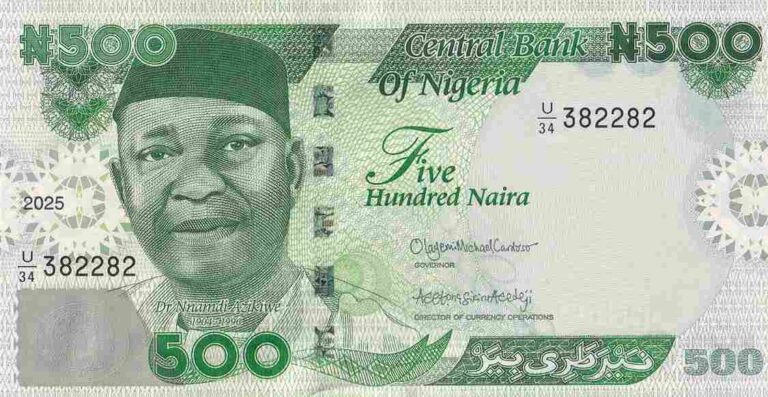
Nigeria is not in SEPA, and Nigerian accounts do not use IBANs. They use a 10-digit NUBAN, which you can check with our NUBAN validator. Find a Nigerian bank's SWIFT code with our Nigeria SWIFT code finder.
The Data This Tool Uses
The country list comes from the EPC's List of SEPA Scheme Countries, version 8.0 (24 December 2025). The rules come from the EPC's 2025 SCT and SCT Inst rulebooks (version 1.1, 5 October 2025). The participant counts come from the EPC's overview of scheme participants, status 7 August 2026. The EPC updates these documents from time to time, so a newer version may add or change a country. We last checked on 18 September 2026.
Frequently Asked Questions
What is SEPA?
SEPA, the Single Euro Payments Area, is a set of payment schemes run by the European Payments Council so that euro payments between banks in participating countries work like a domestic payment. The main ones are SEPA Credit Transfer, SEPA Instant Credit Transfer and SEPA Direct Debit.
Which countries are in SEPA?
The EPC's list (version 8.0, 24 December 2025) has 41 countries: the 27 EU member states, Iceland, Liechtenstein and Norway, and 11 others (Albania, Andorra, Moldova, Monaco, Montenegro, North Macedonia, San Marino, Serbia, Switzerland, the United Kingdom and Vatican City State). It also covers Guernsey, Jersey, the Isle of Man, Saint-Pierre-et-Miquelon and Gibraltar.
Is the UK in SEPA?
Yes. The EPC decided that the United Kingdom stays in the SEPA geographical scope after Brexit, with effect from 1 February 2020. Switzerland is in SEPA as well. UK and Swiss banks join the schemes voluntarily, and the EU regulations do not apply to them directly.
Is Nigeria in SEPA?
No. Nigeria is not on the EPC list, so a payment between a Nigerian bank and a European bank is not a SEPA payment. It normally goes as an international transfer, for example over SWIFT. Nigerian accounts also do not use IBANs. They use a 10-digit NUBAN.
Can I make a SEPA payment in pounds, dollars or another currency?
No. SEPA schemes handle payments in euro only. Your account can be in another currency, and your bank can convert the amount to euro, but the conversion is not covered by the scheme. A payment in another currency is not a SEPA payment.
Do I need a BIC or SWIFT code for a SEPA payment?
Usually not. You give the recipient's IBAN. The scheme rules say the beneficiary bank's BIC only has to be provided if the sending bank explicitly asks for it.
How long does a SEPA Credit Transfer take?
The payer's bank must credit the payee's bank within one banking business day of receiving the payment order. Banking business days exclude weekends and bank holidays, so a payment sent late on a Friday can arrive on the next business day.
How fast is SEPA Instant?
SEPA Instant Credit Transfer is available 24 hours a day on every calendar day, apart from short planned maintenance, and funds should reach the payee within seconds. The EPC's 2025 rulebook sets a target of 5 seconds, and under EU law the time limit for instant euro transfers is 10 seconds.
Is there a maximum amount for SEPA payments?
The scheme rules leave value limits to each bank. Since the 2025 rulebook, the instant scheme no longer has a maximum amount of its own. Your bank can still set limits, so check with your bank.
Does every bank offer SEPA Instant?
Not everywhere. EU law requires euro-area banks that offer credit transfers to receive instant euro payments (since 9 January 2025) and send them (since 9 October 2025), with the same deadlines falling on 9 January and 9 July 2027 for EU banks outside the euro area. Banks in other SEPA countries join voluntarily, and the table on this page shows how many take part in each country.
What is Verification of Payee?
It is a service that lets a payer check that the payee's name matches the IBAN before authorising a transfer. The Instant Payments Regulation required euro-area banks to offer it from 9 October 2025, and EU banks outside the euro area must offer it from 9 July 2027.
Which countries joined SEPA recently?
The EPC admitted Montenegro and Albania (decision of 21 November 2024), North Macedonia and Moldova (6 March 2025) and Serbia (22 May 2025). Bulgaria adopted the euro on 1 January 2026. Many websites still describe SEPA as having about 36 countries, which is out of date.
What is OCT Inst?
The One-Leg Out Instant Credit Transfer scheme is an EPC scheme for the euro leg of instant payments that enter or leave SEPA. It went live on 28 November 2023 and is offered through banks and payment providers, so ask yours whether they use it.
How current is the data?
The country list is the EPC's version 8.0 (24 December 2025), the rules come from the 2025 SCT and SCT Inst rulebooks, and the participant counts are the EPC's status as of 7 August 2026. We last checked on 18 September 2026. The EPC updates these documents, so a newer version may add or change a country.