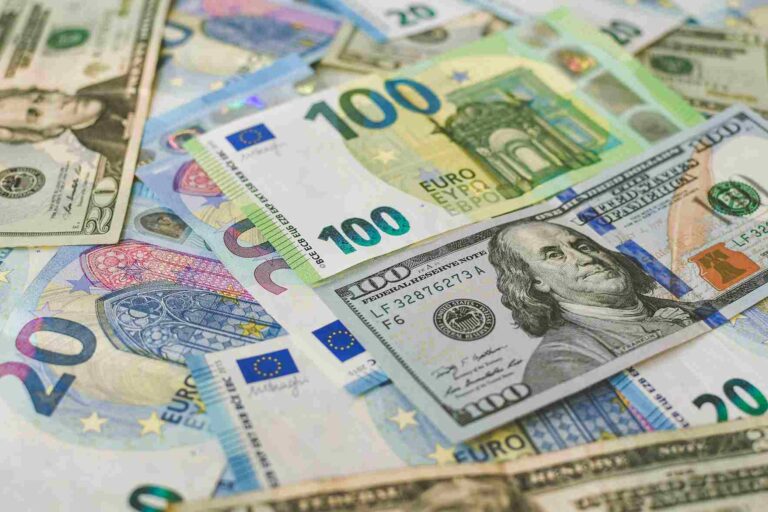

Salary FX Calculator
Convert a salary in dollars, pounds, euros or another currency into naira, and compare two pay offers by value.
Enter what you are paid, in any currency and per year, month, week or hour, and the calculator gives it in naira per year, month, week, day and hour, at the official reference rate, the parallel market average or a rate you type. Add a second offer, such as a Nigerian job, and it compares them in naira and in buying power, using the World Bank's price levels: a dollar goes further in Nigeria than in the United States, where household prices at market exchange rates are about 0.21 of the US level in 2025. It also shows how many times the national minimum wage the pay is. For example, $3,000 a month at ₦1,400 a dollar is ₦4,200,000 a month, 60 times the minimum wage.
Convert and Compare Your Pay
Loading the rates.
Working time, and where the money is spent (for buying power)
Hours and weeks are used for weekly, daily and hourly figures. The country sets the price level for the buying power comparison: choose Nigeria for money you will spend in Nigeria, even if it is paid in dollars.
What Household Prices Cost, Country by Country, 2025
The World Bank's purchasing power parity conversion factor for household consumption tells how much local money buys what one US dollar buys in the United States. Divided by the official exchange rate, it gives the price level: what the same basket of household consumption costs at market exchange rates, with the United States as 1.00. A low figure means that prices are low when measured in dollars, so a dollar goes further.
| Country | Price level (US = 1.00) | Local money per international $ |
|---|---|---|
| Nigeria | 0.21 | 318.06 |
| United States | 1.00 | 1.00 |
| United Kingdom | 0.92 | 0.70 |
| Canada | 0.90 | 1.26 |
| Germany | 0.81 | 0.72 |
| United Arab Emirates | 0.69 | 2.53 |
| South Africa | 0.43 | 7.74 |
| Ghana | 0.42 | 5.25 |
| Kenya | 0.35 | 44.98 |
| India | 0.23 | 19.84 |
| China | 0.48 | 3.46 |
| Egypt, Arab Rep. | 0.16 | 7.72 |
| Australia | 0.94 | 1.46 |
| Saudi Arabia | 0.50 | 1.87 |
| Philippines | 0.36 | 20.53 |
| Japan | 0.69 | 103.34 |
World Bank, PPP conversion factor for households' final consumption (PA.NUS.PRVT.PP) and official exchange rate (PA.NUS.FCRF), updated 2026-07-13.
What a Dollar Salary Was Worth in Naira Over the Years
A pay of $1,000 a month, converted at the official annual average rate of each year. The rate is the World Bank's series, which is also used on our naira depreciation calculator.
| Year | ₦ per $1 | $1,000 a month is | A year |
|---|---|---|---|
| 2015 | ₦192.44 | ₦192,440 | ₦2,309,284 |
| 2019 | ₦306.92 | ₦306,921 | ₦3,683,051 |
| 2022 | ₦425.98 | ₦425,979 | ₦5,111,750 |
| 2023 | ₦645.19 | ₦645,194 | ₦7,742,329 |
| 2024 | ₦1,478.97 | ₦1,478,965 | ₦17,747,582 |
| 2025 | ₦1,518.38 | ₦1,518,381 | ₦18,220,571 |
Go Deeper
How the Conversion Works
The calculator turns your pay into a yearly amount first: a monthly pay is multiplied by 12, a weekly pay by the weeks paid in a year, and an hourly pay by the hours worked a week and the weeks paid. It then multiplies the yearly amount by the rate, naira per one unit of your currency. Monthly, weekly, daily and hourly figures are the yearly amount divided back. A working day is one fifth of a week.
Which Rate Should You Use?
- Official reference rate. The rate from Open Exchange Rates that our server publishes, for more than 170 currencies. It is a reference for the interbank market, not a rate that a bank will give a customer.
- Parallel market average. The average of the parallel market quotes that we collect each day, for the dollar, pound, euro and Canadian dollar. It is closer to what many people pay or receive in cash, when the two rates differ. It is not a quote.
- Your own rate. The rate you were actually given, or the rate you plan to use. Use it when you know what your bank or your transfer provider will pay.
The official and parallel market rates can differ, and the gap changes, so the same salary can convert into different amounts of naira. Use the rate that matches how you will really receive the money. Our exchange rate page shows both rates.
Gross Pay, Take-Home Pay and What Is Left Out
The calculator does not know your tax, your pension or your benefits. Compare like with like: two take-home amounts, or two gross amounts. The pay from abroad may also differ in what it includes, such as health insurance, a housing allowance, a bonus, paid leave, or the costs of moving, and those are not in the figures. If you receive the money through a transfer, the transfer has its own cost: our remittance calculator works out the fee and the exchange rate margin.
Comparing Buying Power, Not Only Naira
Converting a salary at the exchange rate says what it is worth in naira. It does not say what it buys where you live. Prices differ between countries, so the World Bank's International Comparison Program estimates purchasing power parity conversion factors, which express local money in international dollars: dollars with the price level of the United States. The calculator divides each yearly pay by the factor for the country where it is spent. In 2025 the factor for household consumption was ₦318.06 per international dollar in Nigeria, against an official rate of ₦1,518.38 per dollar, so household prices in Nigeria were about 0.21 of the US level at market exchange rates.
An example, with invented pay: $36,000 a year in the United States is $36,000 in international dollars, and ₦18,000,000 a year in Nigeria is $56,593 in international dollars. On this measure the Nigerian pay buys more of what households consume in Nigeria than the US pay buys in the United States. Two cautions apply. The measure is a national average of household consumption, and your own spending may be different, for example with imported goods, school fees abroad or savings in dollars. And the World Bank's factors come from the International Comparison Program, and for countries that did not take part they are estimated.
If You Are Paid in Dollars and Live in Nigeria
Many people are paid by employers abroad and live in Nigeria. For them, the naira figures are what matters for daily costs, and the rate they actually receive is what counts: choose your own rate or the parallel market average if that is what you get. For buying power, choose Nigeria as the country where the pay is spent. The naira depreciation calculator shows what a change in the rate does to a dollar salary in naira over the years.
Comparing a Job Abroad With a Job in Nigeria
Offer A can be the job abroad and offer B the job in Nigeria. The naira comparison shows the gap at the exchange rate. The buying power comparison uses each country's price level, and so answers a different question: what each pay buys where you would spend it. Neither counts tax, the cost of moving, visa and exam fees, or a period without work, so use them as two lenses and not as a verdict.
The National Minimum Wage as a Yardstick
The calculator shows the monthly pay in naira as a multiple of ₦70,000, the national minimum wage that President Bola Tinubu signed on 29 July 2024, according to news reports of the signing. It is a yardstick, not a measure of what anyone needs to live on.
What This Page Uses
The buying power comparison uses the World Bank's PPP conversion factor for households' final consumption expenditure and official exchange rate, for 145 countries in 2025, from the International Comparison Program and the IMF, under the CC BY 4.0 licence, updated on 2026-07-13. The naira rates of past years are the World Bank's official annual averages. The reference rates are from Open Exchange Rates through our server, and the parallel market averages are our own daily averages, described on our methodology page. The minimum wage is from the Nairametrics report of the signing. The arithmetic was checked against high-precision calculation on 2,000 cases. We last checked on 20 September 2026.
Frequently Asked Questions
What does the Salary FX Calculator do?
It converts a pay in dollars, pounds, euros or any of more than 170 currencies into naira, per year, month, week, working day and hour. You can add a second offer, such as a job in Nigeria, and compare the two in naira and in buying power. It also shows how many times the national minimum wage the monthly pay is.
How do I convert a dollar salary to naira?
Multiply the yearly amount by the naira rate for one dollar, and divide by 12 for a month. For example, $3,000 a month is $36,000 a year. At ₦1,400 to the dollar that is ₦50,400,000 a year, or ₦4,200,000 a month. The example is invented, not a rate or an offer.
Which exchange rate should I use for my salary?
Use the rate that matches how you really receive the money. The official reference rate suits a comparison at the interbank rate, the parallel market average is what many people meet in cash when the two rates differ, and your own rate is what your bank or transfer provider actually gave you. The calculator lets you choose any of the three.
What is the difference between the official and parallel market rate?
The official rate is the rate at which the interbank market trades, and the parallel market rate is the rate at which the currency changes hands outside it. When the two differ, the same salary converts into a different amount of naira. The parallel market average on this page is our own average of published quotes, and it is available for the dollar, pound, euro and Canadian dollar.
How do I convert an hourly rate into a yearly salary?
Multiply the hourly rate by the hours worked a week and by the weeks paid in a year. For example, $25 an hour for 40 hours a week over 52 weeks is $52,000 a year. You can change the hours and the weeks in the working time box.
How many times the minimum wage is my pay?
The calculator divides your monthly pay in naira by the national minimum wage of ₦70,000 a month, which President Bola Tinubu signed into law on 29 July 2024, according to Nairametrics. On the example above, ₦4,200,000 a month is 60 times the minimum wage.
Does the calculator take off tax?
No. It converts and compares the amounts you enter, and it does not know your tax, your pension or your contract. Enter what you receive, and compare like with like: two take-home amounts or two gross amounts.
What is buying power, and how is it worked out?
Buying power says what a pay buys where it is spent, not only what it is worth in naira. The calculator uses the World Bank's purchasing power parity (PPP) conversion factor for households' final consumption, which is the amount of local money that buys what one US dollar buys in the United States, and expresses each yearly pay in international dollars. It is a national average and not your own spending.
How does the price level of Nigeria compare with the United States?
The price level is the PPP factor divided by the official exchange rate, with the United States as 1.00. In 2025 the factor for Nigeria was ₦318.06 per international dollar and the official rate was ₦1,518.38 per dollar, so household prices at market exchange rates were about 0.21 of the US level. A price level of 0.92 for the United Kingdom and 0.90 for Canada is shown in the table on this page.
Is a dollar salary in Nigeria worth more than in the United States?
On the World Bank's national averages, a dollar goes further on household consumption in Nigeria. As an invented example, $36,000 a year in the United States is $36,000 in international dollars, and ₦18,000,000 a year in Nigeria is $56,593 in international dollars. The same $36,000 spent in Nigeria comes to $158,461 at ₦1,400 to the dollar. These are averages of household consumption, so they may not match what you buy.
How do I compare a job abroad with a job in Nigeria?
Enter the job abroad as offer A and the Nigerian job as offer B, and choose the country where each pay will be spent under "Working time, and where the money is spent". The calculator shows the gap in naira and in buying power. It does not count tax, the cost of moving, visa and exam fees, or a period without work, so use it as one view of the offers and not as a verdict.
What if I am paid in dollars but live in Nigeria?
Choose the rate you actually receive, your own rate or the parallel market average, and choose Nigeria as the country where the pay is spent. The naira figures then show what the pay is worth for your costs at home, and the buying power figure uses the Nigerian price level.
How much was a dollar salary worth in naira in earlier years?
At the World Bank's official annual average rates, $1,000 a month was ₦192,440 a month in 2015 and ₦1,518,381 a month in 2025. The table on this page has the years in between. The rates are annual averages of the official rate, so they do not show the parallel market.
Where does the data come from?
The PPP factors and official exchange rates are from the World Bank's World Development Indicators, for 145 countries in 2025, updated on 2026-07-13, under the CC BY 4.0 licence. The reference rates are from Open Exchange Rates through our server, and the parallel market averages are our own. The minimum wage is from Nairametrics. We last checked this page on 20 September 2026.
Why is my country not in the buying power list?
The list has the 145 countries for which the World Bank publishes both figures for 2025. For countries that did not take part in the International Comparison Program, the World Bank estimates the factors, so treat those as less certain. If your country is missing, the naira comparison still works.
Is anything I type stored or sent?
No. The calculation runs in your browser. The page asks our server for the public reference rates and the parallel market averages, and it sends nothing about you or your pay.