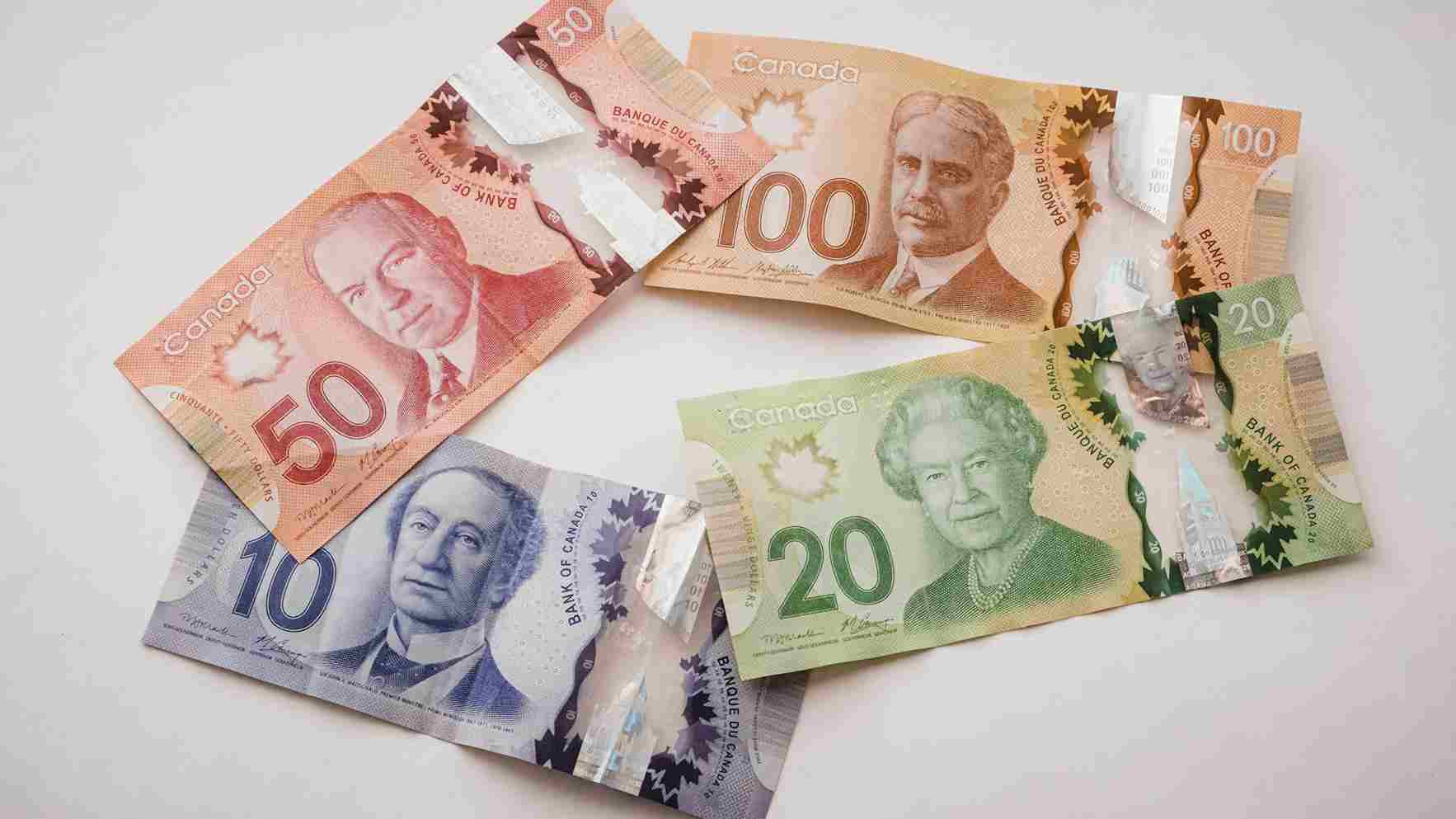
Canadian Dollar to Naira Black Market Rate Today
Parallel market reference rate for the Canadian dollar (CAD) against the naira, with the official-rate gap, a two-way converter and 90 days of history.
Today's Canadian dollar to naira rate
This page shows the parallel market reference rate for the Canadian dollar against the naira, with buying and selling levels and the exact time the data was collected. The rate loads when the page opens.
The Canadian dollar rate is unavailable right now. Check your connection and try again. No figures are shown rather than showing wrong ones.
CAD to NGN · parallel market reference
…
per CA$1 (average of quotes)
- Buying (low)
- …
- Selling (high)
- …
- Daily change
- …
Canadian Dollar to Naira Converter
Type in either box. The other updates instantly at the rate level you choose.
Official vs Parallel Rate for the Canadian Dollar
How far the parallel market rate sits from the official reference rate today.
- Official reference
- …
- Parallel average
- …
- Difference
- …
- Premium
- …
The official reference rate is the interbank rate supplied by Open Exchange Rates. It is not a Central Bank of Nigeria publication, so the CBN's own published figure can differ slightly.
Canadian Dollar vs US Dollar in the Parallel Market
Comparing the Canadian dollar rate with the US dollar rate from the same collection.
CAD to NGN History
Daily average of the parallel market quotes we collected. The chart is a picture of past data, not a forecast. Each day's figure is the average stored for that day, so today's can differ slightly from the rate card above.
Hover or tap the chart to see a day's value.
- Highest daily average
- …
- Lowest daily average
- …
- Average of the period
- …
- Change over the period
- …
View the history as a table
| Date | Average | Lowest | Highest | Quotes |
|---|
Canadian Dollar to Naira Conversion Tables
Common amounts at the buying, average and selling levels. The selling rate is the one that applies when you are buying Canadian dollars with naira.
Canadian Dollars to naira
| Canadian Dollars | At buying rate (₦) | At average (₦) | At selling rate (₦) |
|---|
Naira to Canadian dollars
| Naira | At buying rate (CA$) | At average (CA$) | At selling rate (CA$) |
|---|
Where to Go Next
How to Read the Canadian Dollar to Naira Rate
The rate card at the top of this page shows what one Canadian dollar is worth in naira on the parallel market. It has four numbers you should understand before you use any of them:
- Average: the mean of all the Canadian dollar quotes we collected. This is our headline reference rate.
- Buying (low): the lowest quote we collected. It indicates the level at which a dealer would buy Canadian dollars from you, which is what you receive when you are the one handing them over.
- Selling (high): the highest quote we collected. It indicates the level at which a dealer would sell Canadian dollars to you, which is what you pay when you are buying them with naira.
- Median: the middle quote, shown under the average. It is less affected than the average when a few quotes are unusually high or low.
Where the Canadian Dollar Rate Comes From
AbokiCalculator does not survey dealers directly and does not publish rates for you to trade at. Our rate feed collects published parallel market quotes for the Canadian dollar from several publicly available Nigerian rate-tracking websites, and this page presents the result in one place.
- Each quote is one published Canadian dollar rate from one page on one website.
- Some websites publish more than one quote, so the number of quotes can be higher than the number of websites. The rate card shows both numbers so you can see how broad the sample is.
- The average is the arithmetic mean of the quotes. Buying is the lowest quote, selling is the highest, and the median is the middle one.
- Because a website with several quotes counts several times in a simple average, the median is a useful cross-check. If the average and the median are far apart, treat the average with more caution.
- The daily change compares the latest daily average with the previous day's. The history section uses our own stored daily averages, for up to the last 90 days.
- The timestamp is when the data was last collected, not when you opened the page.
This method cannot tell you what a particular dealer in a particular city will offer you today. Actual rates also vary with cash versus transfer, transaction size and time of day. That is why we describe these figures as indicative market references and never as guaranteed transaction rates. If a figure looks wrong, please tell us through the contact page so that it can be reviewed.
Why One Canadian Dollar Converts to Fewer Naira Than One US Dollar
At current global exchange rates one Canadian dollar is worth less than one US dollar, so it converts to fewer naira. The comparison card above works this out from today's data. It divides the parallel market Canadian dollar rate by the parallel market US dollar rate to show what fraction of a US dollar one Canadian dollar is priced at in Nigeria, and it sets that beside the same ratio at official reference rates.
The two ratios are usually in the same area, but with thinner quoting for the Canadian dollar they can drift further apart than they do for the pound or the euro. That is useful context, but it is not a trading signal.
Official Rate vs Parallel Rate for Canadian Dollars
The official reference rate applies to regulated transactions through banks and other authorised dealers under the Central Bank of Nigeria (CBN). Documented payments such as tuition, travel allowances and import payments are typically handled through that channel.
The parallel market rate forms outside that channel, when demand for foreign currency is greater than what is available through it. The premium in the official-versus-parallel card is the gap between the two as a percentage of the official rate. It differs from currency to currency and changes with market conditions, so check the Canadian dollar figure itself instead of assuming it matches the US dollar. The official vs black market page compares both rates for six currencies at once.
Who Uses the CAD to NGN Rate
- Nigerians in Canada sending money home. The naira your family receives depends on the rate and fees of the route you use.
- Students and families paying Canadian tuition or living costs. These are priced in Canadian dollars, so the naira cost moves with the rate.
- Freelancers and remote workers paid in Canadian dollars. The rate determines what a Canadian dollar invoice is worth in naira.
- Travellers and businesses buying from Canada. They need Canadian dollars and are affected by the selling side of the spread.
Worked Examples: What a Few Naira Per Canadian Dollar Is Worth
These examples use round numbers to show how the maths works. They are illustrations of sensitivity, not today's rates and not predictions.
| Situation | Calculation | Naira |
|---|---|---|
| ₦5 per Canadian dollar difference on CA$1,000 | 1,000 × 5 | ₦5,000 |
| ₦5 per Canadian dollar difference on CA$10,000 | 10,000 × 5 | ₦50,000 |
| Two quotes ₦30 apart on CA$2,000 | 2,000 × 30 | ₦60,000 |
| A 1% rate move on CA$3,000 at ₦1,020 | 3,000 × 1,020 × 1% | ₦30,600 |
Illustrative numbers only.
The third row matters for this currency in particular. Where quotes are far apart, choosing which quote to rely on can matter as much as any market move, so check the median and the number of quotes on the rate card.
What Moves the Canadian Dollar to Naira Rate
- The dollar rate. The Canadian dollar parallel rate is commonly priced relative to the US dollar rate, so movement in one often shows up in the other.
- The Canadian dollar against the US dollar globally. The Canadian dollar can be influenced by commodity prices, including oil, and by Bank of Canada decisions and Canadian economic data.
- Demand in Nigeria. Demand can rise around the start of academic terms and travel seasons, when more people need Canadian dollars for tuition, living costs or trips.
- Remittance flows. More Canadian dollars sent to Nigeria increases supply and can ease the rate, and the reverse.
- CBN policy. Changes to foreign exchange access and allocation rules can shift demand between the official and parallel channels.
- How thinly the currency is quoted. With fewer quotes, one unusual figure has more influence on the average.
Common Mistakes When Converting Canadian Dollars to Naira
- Confusing Canadian and US dollars. They are different currencies with different rates. Make sure a quote is for CAD before you use it.
- Trusting one quote from a wide range. Where quotes disagree, look at the median and the number of quotes, not only the average or the highest figure.
- Using the wrong side of the spread. If you are handing over Canadian dollars, the buying rate is the one that applies to you. If you are buying them, the selling rate is.
- Comparing only the headline rate on a transfer service. Fees and exchange-rate margins both reduce what arrives. Compare the final naira received.
- Relying on yesterday's rate. Parallel market rates can change during the day. Check the collection time and refresh.
Practical Tips Before You Convert Canadian Dollars
- Compare at least two or three options, including your bank or a licensed bureau de change and any transfer service you are considering.
- Ask for the exact rate, all fees and the total naira before you commit.
- For larger amounts, use a bank, a CBN-licensed bureau de change or a regulated transfer service, and keep a record of the transaction.
- Treat any quote that is far outside the low-to-high range on this page as a warning sign and ask why.
- Check the data collection time. If it is old, refresh before you rely on it.
How to Use the Rate History
The history chart and table show the daily average Canadian dollar rate we collected over the last 7, 30 or 90 days, together with the highest, lowest and average value in the period and the change from its first day to its last. They tell you where the rate has been, which helps you judge whether today's figure is unusual. They do not tell you where it is going. A rising rate means each Canadian dollar converts to more naira, which is better for someone selling Canadian dollars and worse for someone buying them, so what counts as good depends on which side you are on.
Frequently Asked Questions
What is the Canadian dollar to naira black market rate today?
The rate card at the top of this page shows today's parallel market reference rate for the Canadian dollar, together with the exact time the data was collected. The average is our headline reference, and the lowest and highest quotes show the range behind it. Actual rates vary by provider, location and transaction size.
How much is CA$100, CA$500 or CA$1,000 in naira on the black market?
Use the converter or the quick conversion table on this page. Both use today's rate and show the naira value at the buying, average and selling levels, so you can see the range rather than a single number.
Why does one Canadian dollar convert to fewer naira than one US dollar?
At current global exchange rates one Canadian dollar is worth less than one US dollar, so it converts to fewer naira. The comparison card on this page shows what fraction of a US dollar one Canadian dollar is priced at in the Nigerian parallel market today.
Why is the gap between the lowest and highest Canadian dollar quote sometimes wide?
Fewer websites and dealers quote the Canadian dollar than the US dollar, so individual quotes can differ more. The median and the number of quotes shown on the rate card help you judge how much weight to give the average.
What is the difference between the buying and selling rate for Canadian dollars?
A dealer buys Canadian dollars from you at the lower buying rate and sells them to you at the higher selling rate. The difference is the spread. On this page the buying rate is the lowest quote we collect and the selling rate is the highest.
How is the parallel rate different from the official rate?
The official reference rate applies to regulated transactions through banks and other authorised dealers. The parallel market rate reflects demand outside that channel. The official-versus-parallel card on this page shows today's difference in naira and as a percentage.
How is this rate calculated?
We collect published parallel market quotes for the Canadian dollar from several publicly available Nigerian rate-tracking websites and average them. Some websites publish more than one quote, so the number of quotes can be higher than the number of websites. We also show the median quote, which is less affected by a few unusual figures.
How often is the Canadian dollar rate updated?
The page shows the exact time the data was last collected. We do not describe these rates as real-time, because parallel market prices can move between collections. Check the timestamp and use the Refresh button to load the latest stored data.
Is it legal and safe to exchange Canadian dollars at these rates?
This page is informational and does not arrange or recommend any transaction. Foreign exchange dealing in Nigeria is regulated by the Central Bank of Nigeria. For larger amounts, use a bank, a CBN-licensed bureau de change or a regulated transfer service, keep a record, and treat any quote far outside the range shown here as a warning sign.
Do Canadian transfer services give better rates than the parallel market?
It depends on the provider, the amount and the fees. Compare the final naira amount your recipient receives after all charges with the reference rate on this page, instead of comparing headline rates alone.
Can I use these rates for tuition payments or accounting?
No. They are indicative references for planning and sense-checking. Use the rate on your invoice, your bank's rate or the Central Bank of Nigeria's published rate for formal payments, accounting and tax purposes.