Guides · Naira and FX
The parallel rate moves away from the official rate when dollar demand outside the banks grows faster than supply. This page explains the six causes that analysts point to, what election history shows, and what could narrow the gap.
Short answer
The parallel market rate is weaker, meaning it takes more naira to buy a dollar, when demand for dollars outside the banking system grows faster than the supply there. The demand comes from people who want dollars quickly, in cash, or without the paperwork a bank asks for.
In mid-November 2026 the gap between the two rates widened to about ₦86, close to 6%, with the official rate near ₦1,358, according to Nairametrics. BDC operators and analysts put it down to festive-season buying, election-related cash demand and limited access to dollars through banks. Economists cited by Nairametrics TV treat a premium of 5% or less as acceptable. The gap has narrowed and widened before in 2026, so a wide gap is not a one-way trend.
On this page
The two rates, and why they differ
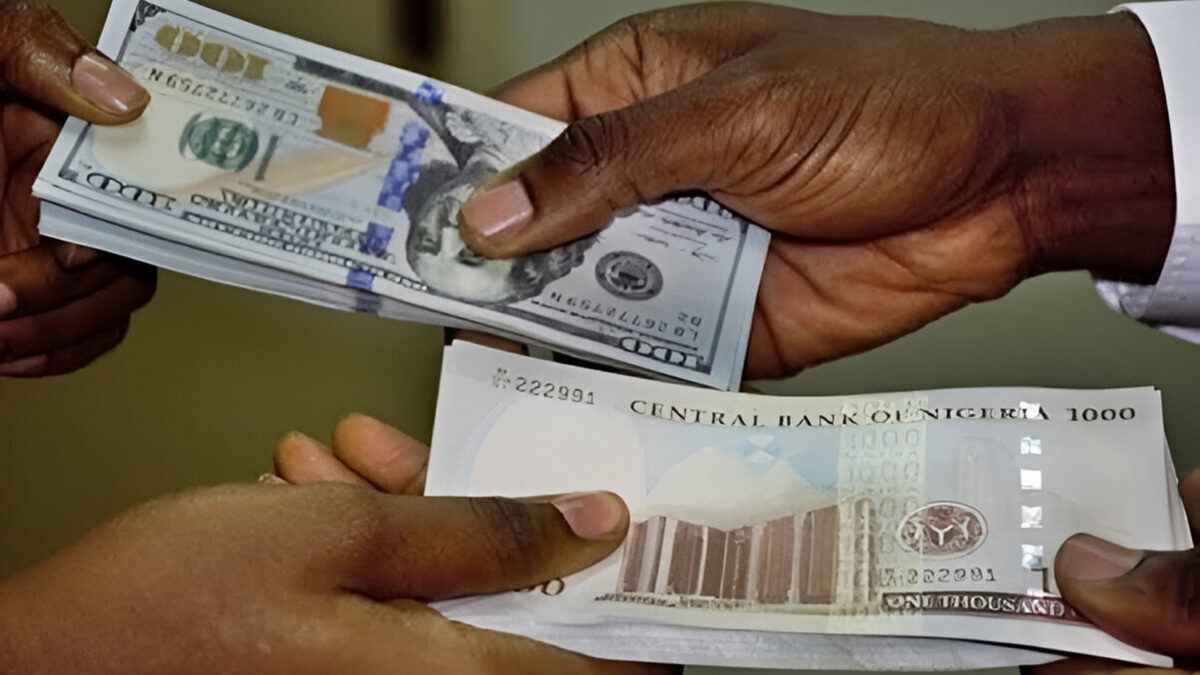
The official rate is the price at which dollars trade in the formal interbank market, the Nigerian Foreign Exchange Market (NFEM), where banks and other authorised participants deal. The Central Bank of Nigeria (CBN) publishes the closing rate each day. The parallel market is everything outside that window: bureau de change (BDC) operators, informal dealers, and sellers who deliver dollars as cash or as an electronic transfer.
The parallel rate usually sits above the official rate. Buying there is quick, it needs fewer formalities than a bank, and cash is easy to carry. The host of the Nairametrics TV Money Brief uses that reasoning to explain why the parallel price is normally a little higher. The size of the premium tells you how much demand the formal market is leaving unmet.
How big a gap is normal
Economists cited in the Nairametrics TV video treat a premium of 5% or less as acceptable, because a small premium is expected. In mid-November 2026 the gap was about ₦86, or roughly 6%, which the host calls slightly above that marker.
The gap has been much smaller and much larger in the same year. The host says it fell as low as ₦1.50 at its narrowest in 2026. In February 2026 it crossed ₦90 for the first time in three years, according to Nairametrics. Use the panel to see where it stands now and what it costs on an amount you choose.
The gap right now, on your amount
Loading the latest figures…
Our parallel figure is the average of published quotes from Nigerian rate websites, shown only when at least two quotes from two websites back it. The official figure is an interbank reference from Open Exchange Rates. News reports quote Lagos or Abuja BDC prices and the CBN's NFEM close, so they can differ from these by several naira. See our methodology.
Six causes analysts point to
Nobody publishes a full breakdown of who is buying dollars in the parallel market. The causes below come from BDC operators and analysts quoted by Nairametrics, and from the host of its Money Brief. They are explanations, not measurements.
- Festive-season buying. BDC operators told Nairametrics that demand rises in the weeks before Christmas, as people and businesses bring in goods for the season and buy dollars for travel, school fees, medical bills and overseas purchases. They said the pressure builds before the holiday and not on the day itself. Some buyers prefer the parallel market because it is faster than going through a bank.
- Election-related cash demand. Analysts and BDC operators said that campaign spending creates demand for dollars outside the official window. Their reasons are that dollars are easier to carry than the same value in naira, and that cash is harder to trace. They also pointed to election equipment that is imported. The CBN governor said in September that the bank was ready to manage liquidity pressure from election spending.
- Limited access to dollars through banks. BDC operators said that importers, small businesses, parents paying school fees and medical travellers often struggle to get dollars through banks, and that the documents a bank requires slow things down. When a legitimate need cannot be met at the official rate, they said, buyers turn to the parallel market and pay a premium.
- BDCs are only partly back in the official supply chain. In February 2026 the CBN let licensed BDCs buy up to $150,000 a week from authorised dealer banks at the prevailing rate. They must pass the banks' checks, sell back unused dollars within 24 hours, and cap cash at 25% of each transaction. BDC operators said that most official liquidity still goes through commercial banks and priority sectors, so retail demand is not fully met.
- Heavy imports. An analyst quoted by Nairametrics said that Nigeria's import bill puts steady pressure on the naira and that official supply can be used up by import demand.
- Speculation. Nairametrics reports that a wide gap can attract arbitrage and speculative buying, particularly when people expect the premium to widen further, which can make the gap feed on itself.
One reason you may hear is school fees. The host of the Money Brief disagrees with it, because school fees can now be paid through a bank at the official rate if you show the documents. Our guide on paying school fees abroad covers the limits. The host also notes that many people hold dollars in domiciliary accounts already.
Reserves are not on the list because the reports we found do not agree. One put reserves at $55.16 billion on 22 October and another put them at $43.64 billion on 14 November, so we cannot use reserves to explain this gap.
What election history shows
Nigeria's presidential and National Assembly elections are scheduled for 16 January 2027, and the governorship and state assembly elections for 6 February 2027, according to INEC's calendar. The presidential campaign period began on 19 August 2026.
The Money Brief looked at past election cycles in Nairametrics' data. Its reading is that the parallel rate did not show a clear pattern of weakening before or during elections, with only small spikes. It found that the naira has more often weakened after an election. In the past that was sometimes linked to policy, when the official rate had been held steady and was then moved closer to the parallel rate. The host adds that the current regime is flexible, so the old pattern may not repeat. We did not test the historical data ourselves, so read this as the video's analysis and not as a forecast.
What could narrow the gap
The host of the Money Brief sees two likely moves by the CBN: supplying more dollars to the retail end of the market, or letting the official rate weaken toward the parallel rate. He thinks the first is more likely, because the CBN has acted that way before. He also thinks the pressure is probably temporary. These are his opinions.
There is a recent precedent for the first move. When the gap crossed ₦90 in February 2026, the CBN's circular of 10 February let BDCs buy dollars from the official market, as described above. The host says that a gap above ₦100 would be a warning sign that could prompt the CBN to act. He is also clear that the CBN no longer sets the rate, and that it follows the market.
Nobody can say when or whether the gap will close. If you want to track it, the naira rate tracker shows our 90-day history, and our page on official and parallel rates explains the difference between them.
What it means for you
This is information, not advice. The right rate for you depends on what you are paying for.
- School fees, tuition and travel allowances are bought through banks at the official rate, within limits. See our guides on school fees abroad and the personal travel allowance.
- If you receive money from abroad, the rate your recipient gets depends on the provider, not on the parallel rate. Compare offers with the Remittance Calculator, and read how exchange rates change the money you send home.
- If you are comparing quotes, measure the margin in each one. Our guide on how FX spreads work shows how.
- To see what a naira amount is worth in other currencies today, use the currency converter or the naira value calculator.
A November 2026 snapshot
These are reported prices on those days, not live figures. Sources quote different things, such as BDC selling rates and the NFEM close, so compare rows only within the same source.
| Date | Parallel (reported) | Official, NFEM (reported) | Gap |
|---|---|---|---|
| 12 Nov | ₦1,445 | ₦1,358.50 | ₦86.50 (Nairametrics) |
| 18 Nov | ₦1,470 (Lagos BDC selling rate) | ₦1,363.23 | About ₦107, or 7.8% (our arithmetic from Vanguard's figures) |
Vanguard described ₦1,470 as the weakest parallel rate since 28 January. Nairametrics reported the NFEM rate at ₦1,379.99 on 19 November, so the official rate was moving too. The Money Brief, recorded in the same week, put the parallel rate at about ₦1,445 to ₦1,455 and the official rate at about ₦1,350 to ₦1,358.
Related questions
Why is the parallel market rate higher than the official rate?
The parallel market is faster and needs fewer formalities than a bank, and cash is easy to carry, so buyers pay a premium for it. A small premium is normal. A wide one means demand for dollars is not being met in the formal market.
Is a 6% gap between the official and parallel rate normal?
Economists cited by Nairametrics TV treat a premium of 5% or less as acceptable. At about 6% in mid-November 2026, the gap was slightly above that marker. It has been much smaller and larger at other points in 2026.
Why has the naira weakened in the parallel market?
BDC operators and analysts quoted by Nairametrics point to festive-season buying, election-related cash demand, limited access to dollars through banks, BDCs being only partly back in the official supply chain, heavy imports and speculation. These are explanations from market participants, not measurements.
Will the 2027 elections weaken the naira?
The Nairametrics TV analysis of past election cycles found no clear pattern of the parallel rate weakening before or during elections, and more weakening after them. The host notes that the current flexible regime may behave differently. Nobody can say for sure.
Can the CBN close the gap?
It has acted before. In February 2026, when the gap crossed ₦90, the CBN let licensed BDCs buy up to $150,000 a week from authorised dealer banks. The host of the Money Brief expects the CBN might supply more dollars to the retail end or let the official rate move, and says a gap above ₦100 would be a warning sign. Those are opinions.
Which rate applies to school fees or travel allowance?
School fees, tuition and travel allowances are bought through authorised dealer banks, within the limits the CBN sets, so the official market applies. The parallel rate applies only if you buy dollars outside the banking system.
Why do news reports and this site show different rates?
Reports quote BDC prices in a city and the CBN's NFEM close. This site shows the average of published quotes for the parallel market and an interbank reference from Open Exchange Rates for the official rate. Differences of several naira are normal.
Keep going
Sources
- Nairametrics TV, Why are we seeing a weaker naira in the parallel market (Money Brief, published 19 November 2026): the festive, election, school fee and cash-demand explanations, the 5% rule of thumb, the host's reading of election history and his views on CBN options.
- Nairametrics, Election spending, festive demand threaten Naira as parallel-official FX gap widens (17 November 2026): BDC and analyst explanations, the 12 November rates and gap, the 2026 BDC rules and the CBN governor's September comment.
- Nairametrics, CBN allows BDCs back into official FX market with $150,000 weekly cap (11 February 2026): the 10 February circular, and the gap crossing ₦90 for the first time in three years.
- Vanguard, Naira weakens to N1,470/$ at parallel market (18 November 2026): the 18 November parallel and NFEM rates, the weakest level since 28 January, and the reserves figure of $43.64 billion on 14 November.
- Legit.ng, Fresh CBN dollar rate emerges as naira slides despite $55 billion reserves (25 October 2026): the $55.16 billion reserves figure on 22 October.
- Independent National Electoral Commission, Election calendar: the governorship and state assembly elections on 6 February 2027. The presidential date of 16 January 2027 and the campaign window are from the revised timetable of February 2026, as reported by BBC Pidgin and Galaxy TV.
This guide explains why the parallel and official naira rates differ. It is not financial or investment advice, and it does not predict where the rate will go. Rates move daily, and the figures in the November snapshot are reported prices on those days.