Guides · Nigeria Payments
The personal travel allowance is foreign currency a Nigerian bank can sell you for personal travel abroad. This page covers the 2026 limit, the new 75% card rule and what to ask your bank before you apply.
Short answer
The personal travel allowance, or PTA, is foreign currency that an authorised dealer bank can sell you for personal travel abroad. Under the CBN's 2026 Foreign Exchange Manual, the maximum stays at $4,000 per quarter for eligible travellers aged 18 and above.
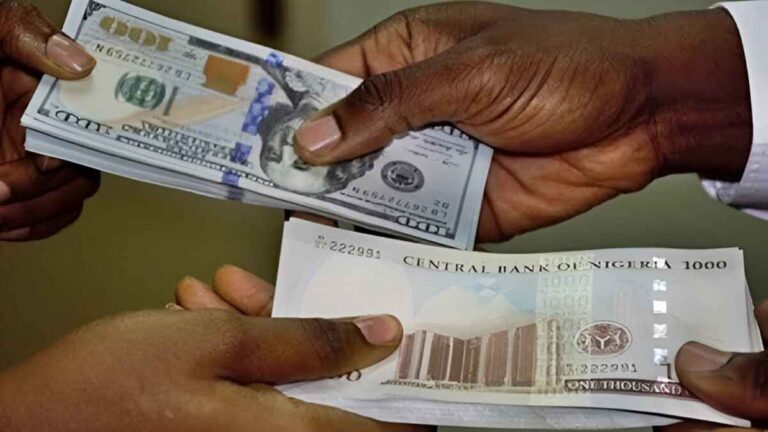
The change is in how it is paid. At least 75% must go through a card or another approved digital channel, and the remaining 25% can be paid in cash. On the full $4,000, that means at least $3,000 on a card or digital channel and up to $1,000 in cash.
On this page
What the PTA is and who can get it
The PTA is one of several foreign currency allowances that Nigerian banks sell to individuals for specific purposes. It covers personal travel. The CBN's 2026 manual keeps the ceiling at $4,000 per quarter and limits it to eligible travellers aged 18 and above.
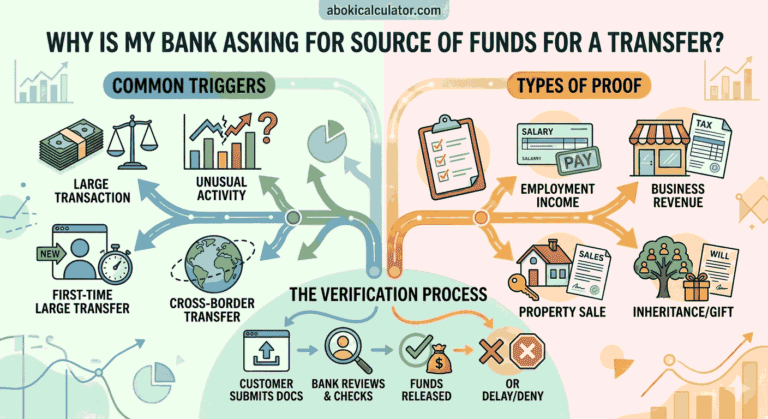
You buy it from an authorised dealer bank, which is a bank licensed by the CBN to deal in foreign exchange. Before 2026, one bank's trade pages described Form A as the application form for travel allowances, along with school fees and medical bills. Press and law-firm summaries say the 2026 manual removed Form A for outward transfers from a self-funded domiciliary account. They do not say it removed Form A for buying foreign currency with naira, so ask your bank which forms and documents it needs.
The CBN gave the 2026 manual to authorised dealer banks and did not publish the text, so the figures here come from press reports and law-firm summaries. Ask your bank how it applies them.
How it is paid in 2026
Authorised dealer banks must now pay at least 75% of the allowance through cards or other approved digital channels. The remaining 25% can be paid in cash.
| Share | Amount on $4,000 | |
|---|---|---|
| Card or approved digital channel | At least 75% | At least $3,000 |
| Cash | Up to 25% | Up to $1,000 |
Press reports say the business travel allowance follows the same 25% cash rule. They give no business limit that we could confirm, so ask your bank for it.
Carrying cash out of Nigeria
Press reports of the manual say you can take foreign currency in cash or negotiable instruments out of Nigeria up to $10,000, or the equivalent in another currency, without a declaration. Above that amount you declare it at the point of exit on Form TE. Above $50,000, you need verifiable evidence that the funds came from an authorised dealer bank.
The 25% cash share of a full PTA is $1,000, which sits well under the declaration line.
Questions to ask your bank
- Which documents do you need from me, and how early should I apply?
- Which exchange rate will you use, and what fee or margin do you charge?
- Which card or digital channel will carry the 75% share, and does it work in the countries I am visiting?
- Can I collect the cash share as dollars, or in another currency?
- What happens to the unused part of a quarter's allowance?
The rate matters as much as the limit. Our guide on how FX spreads work shows how to measure the margin in a quote, and the currency converter gives a reference point.
PTA, tuition and your own dom account
The PTA covers personal travel only. School fees and living costs for a student abroad fall under separate allowances, each with its own limit.
If you already hold foreign currency in a domiciliary account, you do not need to buy a PTA to spend it. Press reports say a dom account holder can start telegraphic transfers of up to $10,000 a day. Our guide to the domiciliary account explains how those accounts work.
Related questions
What is the PTA limit in Nigeria?
The 2026 Foreign Exchange Manual keeps the personal travel allowance at a maximum of $4,000 per quarter for eligible travellers aged 18 and above, according to press reports of the manual.
How much of the PTA can I take in cash?
Up to 25%. At least 75% must be paid through cards or other approved digital channels. On a full $4,000 allowance that is up to $1,000 in cash.
Who can get a personal travel allowance?
Travellers aged 18 and above who are eligible under the CBN rules, through an authorised dealer bank. Ask your bank which documents it needs, because banks set their own checklists.
Is the business travel allowance the same as the PTA?
No. It is a separate allowance. Press reports say it follows the same 25% cash and 75% digital split, but we found no business limit we could confirm, so ask your bank for the figure.
Can I use the PTA to pay school fees abroad?
No. Tuition and maintenance for students abroad are separate allowances with their own limits and are paid to the institution when billed together.
Do I need the PTA if I hold dollars in a domiciliary account?
Not to spend your own foreign currency. A dom account holder can start telegraphic transfers of up to $10,000 a day, as press reports describe the 2026 manual. Your bank may still ask what a payment is for.
Keep going
Sources
- TheCable, $10k for cross-border movement, hefty fines: 7 things to know about CBN's new FX manual (3 June 2026): the $4,000 quarterly PTA, the 75% card and digital share, the $10,000 cash declaration, the $50,000 evidence rule and the $10,000 daily dom account transfer limit.
- Daya, Do you still need Form A and Form M in Nigeria? (8 October 2026), which summarises law-firm readings of the manual and one bank's trade pages: the same 25% cash split, Form A's role for travel allowances and its removal for self-funded dom account transfers.
- Central Bank of Nigeria, Reforms and Initiatives: the launch of the fourth edition of the Foreign Exchange Manual in May 2026.
This guide explains the personal travel allowance in general terms. It is not financial or legal advice. The CBN can change its rules, and banks apply their own procedures, so confirm the details with your bank before you apply.