
Guides · Naira and FX
There is more than one naira rate, and the one on the news is rarely the one you get. This page explains the official, parallel and quoted rates, why they differ, and how to read the number a bank or app shows you.
Short answer
The naira has four rates that people mix up. The official rate is the price in the formal interbank market, the Nigerian Foreign Exchange Market (NFEM), and the CBN publishes its closing rate each day. The parallel rate is the price from bureau de change operators and informal dealers. A reference rate, such as the one from Open Exchange Rates, is a neutral benchmark. And the rate you actually get is the one a bank or app quotes you, which is usually worse than the reference by its margin.
The official and parallel rates normally sit a few percent apart. Economists cited by Nairametrics TV treat a gap of 5% or less as acceptable. The panel below shows the gap now.
On this page
The four rates
| Rate | What it is | Who uses it |
|---|---|---|
| Official rate | The price in the Nigerian Foreign Exchange Market, where banks and other authorised participants trade. The CBN publishes the daily close | Banks, importers, school fee and travel allowance payments, licensed money transfer operators |
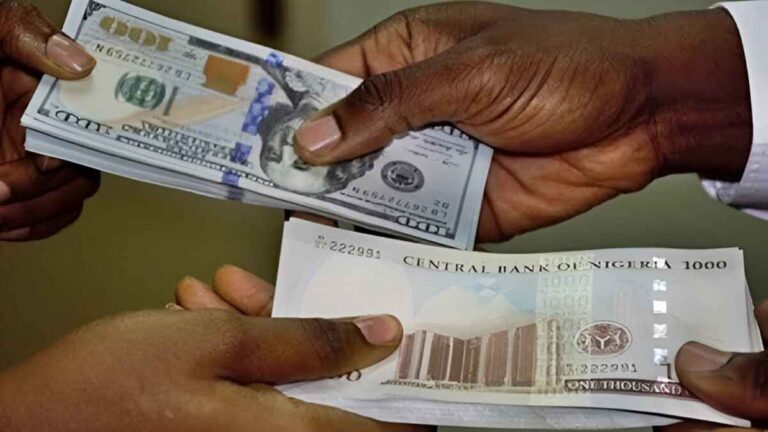
| Parallel rate | The price from BDC operators and informal dealers, in cash or by electronic transfer | People who want dollars quickly or outside the banking system |
| Reference or mid-market rate | A neutral benchmark halfway between buying and selling prices. Our site uses an interbank reference from Open Exchange Rates | Anyone checking a quote |
| The rate you get | What a bank, app or money transfer company actually offers you, after its margin | You |
Why they differ
Nigeria unified its exchange rates on 12 October 2023, with the CBN adopting a willing-buyer, willing-seller model for trade transactions. Since then the official rate has moved with trading. The host of the Nairametrics TV Money Brief says it went from about ₦1,500 in mid-2025 to about ₦1,350 by November 2026.
The parallel rate answers to demand outside the banks. When people want dollars faster, in cash, or without the paperwork a bank asks for, the premium rises. Our guide on why the naira is weaker in the parallel market sets out the causes analysts point to.
The gap right now
The panel reads our own live feeds. Our parallel figure is the average of published quotes, and the official figure is an interbank reference, so they can differ by several naira from the CBN close and from BDC prices in the news.
The gap right now, on your amount
Loading the latest figures…
Our parallel figure is the average of published quotes from Nigerian rate websites, shown only when at least two quotes from two websites back it. The official figure is an interbank reference from Open Exchange Rates. News reports quote Lagos or Abuja BDC prices and the CBN's NFEM close, so they can differ from these by several naira. See our methodology.
How to read the rate you are quoted
Compare the offered rate with the reference rate for the same currency pair at the same time. The gap, as a share of the reference, is the margin:
margin % = (reference rate - offered rate) / reference rate x 100
As an illustration only, if the reference rate is ₦1,350 per dollar and a provider offers ₦1,320, the margin is (1,350 - 1,320) / 1,350, which is about 2.2%. A transfer that shows "no fee" can still cost you through that margin. See how FX spreads work and exchange rate vs FX spread, and what international transfers cost for typical totals.
Which rate applies to what
- School fees, tuition and travel allowances are bought through authorised dealer banks, so the official market applies. See school fees abroad and the personal travel allowance.
- Licensed money transfer operators must use the prevailing official-market rate on the day a transfer is received, and they pay naira only.
- The parallel rate applies only if you buy dollars outside the banking system. Read whether that is legal first.
- If you receive money, the rate your recipient gets depends on the provider. See how exchange rates change the money you send home.
Where to track them
Our naira rate tracker shows the 90-day history of parallel quotes, the official and parallel rates page explains how we build each, and the currency converter turns an amount into naira at today's reference rate.
Related questions
What is the official exchange rate in Nigeria?
It is the price at which dollars trade in the Nigerian Foreign Exchange Market, the formal interbank market. The CBN publishes the closing rate each day.
What is the parallel market rate?
It is the price quoted by bureau de change operators and informal dealers, in cash or by electronic transfer. It usually sits above the official rate.
Why is the parallel rate higher than the official rate?
The parallel market is faster and needs fewer formalities than a bank, so buyers pay a premium. A small premium is normal, and a wide one means demand for dollars is not being met in the formal market.
What is the mid-market rate?
A neutral benchmark halfway between the buying and selling prices of a currency pair. It is the reference against which you can measure the margin in a quote.
Why is the rate I am quoted worse than the rate on the news?
A bank or app adds a margin to the reference rate, and news reports usually quote the official close or a BDC price. Measure the margin with the reference rate for the same pair at the same time.
Which rate applies to school fees and travel allowance?
The official market, because they are bought through authorised dealer banks within the CBN's limits.
Is the parallel market rate legal?
Tracking a rate is different from trading at it. Dealing outside licensed channels carries legal risk, which we set out in our guide to buying dollars outside a bank.
Keep going
Sources
- Central Bank of Nigeria, Reforms and Initiatives: the unification of exchange rates on 12 October 2023 under a willing-buyer, willing-seller model.
- Nairametrics TV, Why are we seeing a weaker naira in the parallel market (Money Brief, 19 November 2026): the 5% rule of thumb, and the official rate moving from about ₦1,500 to about ₦1,350.
- The Guardian Nigeria, Receiving money from abroad in Nigeria: What CBN's 2026 remittance rules change (23 October 2026): operators use the prevailing official-market rate on the day a transfer is received.
- Legit.ng, Fresh CBN dollar rate emerges as naira slides despite $55 billion reserves (25 October 2026): the CBN publishes the official closing rate daily.
- AbokiCalculator, methodology: how our parallel average and official reference are built.
This guide explains the different naira exchange rates. It is not financial or investment advice, and it does not predict where any rate will go. The panel shows figures from our own feeds at the time you load the page.