Guides · Nigeria Payments
You do not need a US bank account to be paid in dollars. This page shows the two routes that work, what a US client can and cannot pay into, and what to check before you pick a US dollar account from a provider.
Short answer
No. You do not need a US bank account to get paid in dollars in Nigeria. A client can send an international wire to a dollar account at a Nigerian bank, usually a domiciliary account. Or you can hold a US dollar account with a provider that gives you a US account number and routing number, which lets a US client pay you by ACH.
The difference matters because ACH, Zelle and FedNow only work between US accounts. A Nigerian bank cannot receive them directly, so a client who offers to pay by one of them is really asking for a US account number.
On this page
What the client can pay into
| The client pays by | What you need | Works with a Nigerian bank account? |
|---|---|---|
| ACH | A US account number and routing number | No. ACH is US domestic |
| Zelle | A US bank account, per Zelle's own rules | No |
| FedNow | A US account at an institution that offers it | No |
| International wire | Your name, NUBAN, bank name and SWIFT/BIC | Yes |
| A payout platform or money transfer operator | An account with that service, or your bank details | Yes, in the currency the service pays out. Operators pay naira only |
Route 1: a dollar account at a Nigerian bank
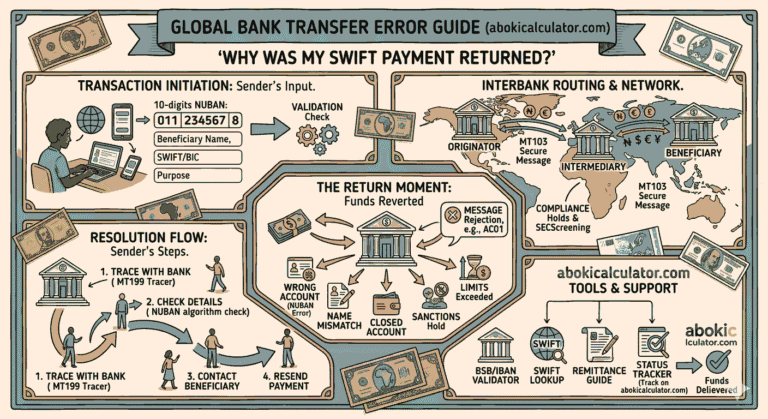
A domiciliary account holds foreign currency, and an international wire in dollars can be credited to it. This is the route that needs no outside provider. Give the client your full name as it appears on the account, your 10-digit NUBAN, your bank's name and SWIFT/BIC, and any intermediary instructions your bank publishes. Nigeria has no IBAN. See what to give a sender instead.
Expect fees on the way in. An intermediary bank can take a cut, so the amount that arrives can be smaller than the invoice. Our guide to the domiciliary account covers what it can do.
Route 2: a US dollar account with a provider
Some financial technology providers give customers outside the US a US account number and routing number. The client pays that account by ACH, FedNow or wire as if it were a US account. The money then sits with the provider, not with a Nigerian bank, and you withdraw it to a Nigerian account or hold it there.
This can be convenient for a US client whose payroll system only accepts a US account. It also moves the risk to the provider. We do not recommend providers here, and we have not verified any provider's licence, fees or limits.
What to check before you choose
- Who holds the money, and under which licence. Ask the provider in writing and look for the answer on its own site.
- What it charges to receive a payment, because a published fee table can include a percentage, a minimum and a cap that differ by payment type, such as ACH and wire.
- How you withdraw to naira, which rate it uses and how long it takes. Compare its rate with a reference. Our guide on how FX spreads work shows how to measure the margin.
- What limits apply to receiving, holding and withdrawing, and what proof the provider will ask you for.
- Whether your own bank will ask questions when the money arrives. See why banks ask for the source of funds.
What to give the client
For a US account at a provider, the client needs the routing number and account number the provider gives you, and the account name. For a Nigerian bank, the client needs the wire details above and not a routing number. Our guide to the ABA routing number explains the difference.
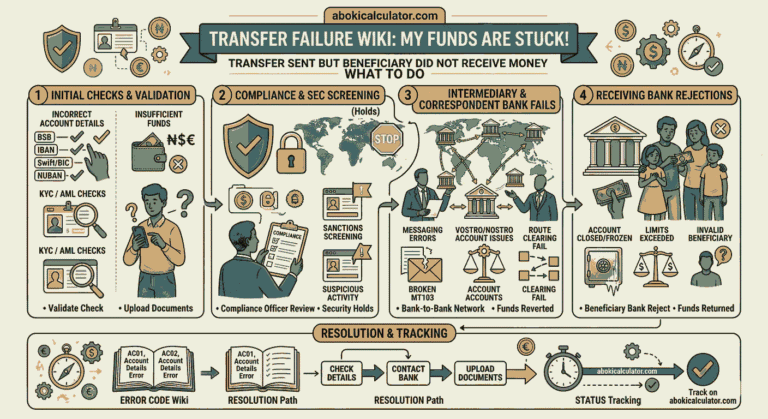
Whichever you use, put the same name on the invoice as on the account. A name that does not match is a common reason for a payment to be held.
Related questions
Do I need a US bank account to get paid in dollars in Nigeria?
No. A client can send an international wire to a dollar account at a Nigerian bank, or pay a US dollar account you hold with a provider. A US bank account of your own is not required.
Can a Nigerian bank account receive ACH?
No. ACH is a US domestic system and works between US bank accounts. A client who wants to pay by ACH needs a US account number to pay into.
Can I receive Zelle in Nigeria?
No. Zelle says the sender and the recipient must both have US bank accounts.
What is a US dollar account from a provider?
A US account number and routing number that a provider gives you, so that a US client can pay by ACH, FedNow or wire. The money is held by the provider, and you withdraw it to Nigeria.
What should I check before using one?
Who holds the money and under which licence, what it charges to receive a payment, how and at what rate you withdraw to naira, what limits apply, and what questions your own bank may ask when the money arrives.
What does a client need to wire dollars to my Nigerian bank?
Your full name as it appears on the account, your 10-digit NUBAN, the bank's name and SWIFT/BIC, and any intermediary instructions your bank publishes. A US routing number is not used.
Keep going
Sources
- Zelle, Can I use Zelle internationally?: the sender and the recipient must both have US bank accounts
- Federal Reserve, FedNow Service FAQs: FedNow is offered by eligible institutions to their customers
- Federal Reserve Financial Services, FedGlobal ACH Payments: the Fed's international ACH service, which names Mexico and Panama
- Swift, Who we are: Swift does not move money, and 90% of payments reach the beneficiary bank in under an hour.
- AbokiCalculator, ACH explained, which cites Nacha: ACH works only between US bank accounts.
This guide explains the routes for being paid in dollars. It is not financial or legal advice, and it does not recommend any provider. Check each provider's licence and terms yourself, and confirm what applies with your bank.