Guides · Nigeria Payments
Many senders in the US start with Zelle or ACH and find they cannot reach Nigeria. This page shows which routes work, what the sender needs from you, and what the 2026 Nigerian rules mean for the money on arrival.
Short answer
Money from the US reaches a Nigerian account by an international bank wire or through a licensed money transfer operator. Zelle and ACH cannot do it. Zelle says the sender and the recipient must both have US bank accounts, and the Federal Reserve's own international ACH service names Mexico and Panama, not Nigeria.
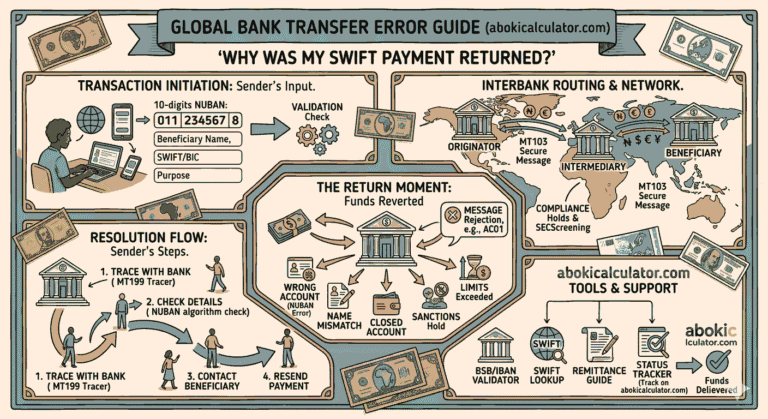
For a wire, the sender needs your full name as it appears on the account, your 10-digit NUBAN, your bank's name and its SWIFT/BIC code. A wire in dollars can be credited to a domiciliary account. An operator pays you in naira only, and cash is capped at the naira equivalent of $200. In the World Bank's data for the third quarter of 2025, sending $200 from the US to Nigeria cost 2.72% on average.
On this page
Which routes work
| Route | Reaches a Nigerian account? | Why |
|---|---|---|
| Zelle | No | Both the sender and the recipient need US bank accounts |
| ACH or FedNow | No | They are US domestic systems. Our guide to ACH covers why |
| International bank wire | Yes | Sent over Swift, often through intermediary banks. A dollar wire can be credited to a domiciliary account |
| Licensed money transfer operator | Yes | Paid in naira only, into a bank account or as cash. Cash is capped at the naira equivalent of $200 |
| A US dollar account you hold with a provider | Indirectly | The sender pays your US account by ACH. The money sits with the provider and is then withdrawn to Nigeria |
See ACH explained for why it stops at the US border, and how to receive money from abroad in Nigeria for the Nigerian rules in full.
What the sender needs from you
- Your full name exactly as it appears on the account.
- Your 10-digit account number, the NUBAN. Nigeria has no IBAN, so a US bank form that asks for one needs a different field. See does Nigeria use IBAN.
- Your bank's name and its SWIFT/BIC code. Check the format with the SWIFT code checker.
- Any intermediary bank instructions your bank publishes for foreign currency, entered exactly as written.
A US routing number is not part of this. It identifies a US bank and does nothing for a payment to Nigeria. Our guide to the ABA routing number explains what it is for.
Wire or operator: how to choose
- If you want dollars, a wire to a domiciliary account is the route. US banks set their own outgoing wire fees, and an intermediary bank can deduct a fee too, so the amount that arrives can be less than the amount sent.
- If you want naira, an operator pays naira, and it must use the prevailing rate in the official Nigerian market on the day the transfer is received. Cash above the naira equivalent of $200 must be paid into a bank account.
- Compare real offers before the sender pays. The Remittance Calculator shows what each provider charges and what arrives, and what international transfers cost gives typical prices.
What the US sender is protected by
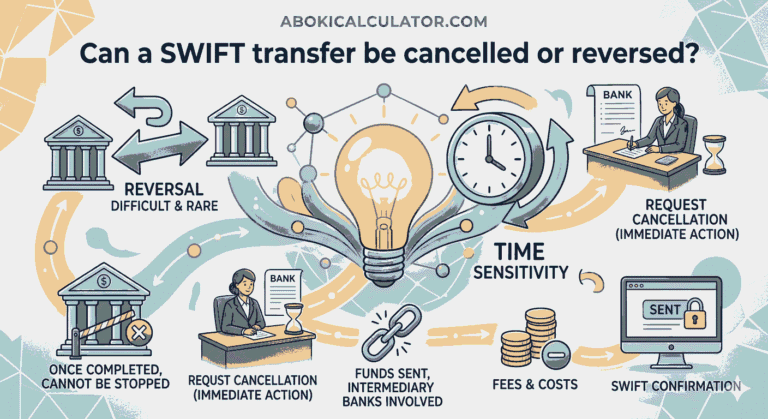
Transfers from US consumers to another country fall under the US Remittance Transfer Rule, which is part of Regulation E. It gives the sender disclosures before payment, error resolution rights, and a right to cancel within 30 minutes of paying, as the Consumer Financial Protection Bureau describes it. Providers differ in how they take cancellation requests, so the sender should keep the receipt and ask quickly.
How long it takes
The cross-border leg is usually fast. Swift's data show 90% of payments reach the beneficiary's bank in under an hour. The wait is often at the end, in the step from your bank to your account. A payment that arrives after your bank's cut-off time, or on a non-working day, is usually processed the next business day, and a bank can hold a payment for review. See why a transfer takes so long.
If it has not arrived
Ask the sender for the payment's UETR, the 36-character tracking code, or the operator's reference number, plus the amount, date and sending bank. Give them to your bank in writing. Our SWIFT payment tracker explains the UETR, and the guide on a transfer that was sent but not received lists the next steps. If your bank asks about the source of the money, read compliance reviews.
Related questions
Can I receive Zelle money in Nigeria?
No. Zelle says the sender and the recipient must both have US bank accounts, so it cannot pay a Nigerian bank account.
Can a US sender pay my Nigerian account by ACH?
No. ACH is a US domestic system and works between US bank accounts. The Federal Reserve's own international ACH service names Mexico and Panama, not Nigeria.
What does a US sender need to send money to my Nigerian bank account?
Your full name as it appears on the account, your 10-digit NUBAN, your bank's name and its SWIFT/BIC code, plus any intermediary instructions your bank publishes. A US routing number is not used.
Can I receive dollars from the US in Nigeria?
A dollar wire can be credited to a domiciliary account. A licensed money transfer operator pays naira only, with cash capped at the naira equivalent of $200 and anything above that paid into a bank account.
How much does it cost to receive money from the US?
Cost falls mostly on the sender. In the World Bank's data for the third quarter of 2025, sending $200 from the US to Nigeria cost 2.72% on average, against a global average of 6.36%. Wires also carry bank and intermediary fees.
How long does money from the US take to arrive?
Swift reports that 90% of payments reach the recipient's bank in under an hour. The last step to your account, cut-off times, non-working days and bank reviews can add a business day or more.
Can the sender cancel a transfer to Nigeria?
Under the US Remittance Transfer Rule, a consumer has a right to cancel within 30 minutes of paying. After that, cancellation depends on the provider and on whether the money has been paid out.
Keep going
Sources
- Zelle, Can I use Zelle internationally?: the sender and the recipient must both have US bank accounts
- Federal Reserve Financial Services, FedGlobal ACH Payments: the Fed's international ACH service, which names Mexico and Panama
- Consumer Financial Protection Bureau, Regulation E, section 1005.34: the 30-minute cancellation right for remittance transfers
- The Guardian Nigeria, Receiving money from abroad in Nigeria: What CBN's 2026 remittance rules change (23 October 2026): the operator rules, the $200 cash cap, the UETR, the cost figures for $200 from the US and the complaint steps.
- Swift, Who we are: Swift does not move money, and 90% of payments reach the beneficiary bank in under an hour.
- World Bank, Remittance Prices Worldwide, third quarter 2025: the US to Nigeria average of 2.72% for $200 and the global average of 6.36%, as reported by The Guardian Nigeria.
This guide explains how money from the US reaches Nigerian accounts. It is not financial or legal advice. Providers set their own fees and rules, so confirm the details with your bank or provider before you send.